Call the shop(469) 777-6701
☎ Call (469) 777-6701 Visit
Home/Auto Paint Shop

Auto paint shop in Plano, TX.

Car painting at a body shop is where a repair is either invisible or obvious, and there is very little ground in between. We spray in-house at the Plano shop, match to your vehicle as it looks today rather than to the code stamped on the door jamb, and blend into the panels on either side so nothing announces itself in a parking lot at four in the afternoon. Extreme Hail & Collision has run its own paint work in Plano since 2022, with a 5.0 rating on Google.

Sprayed in-houseMatched, not guessedBlended every timeLifetime workmanship warranty
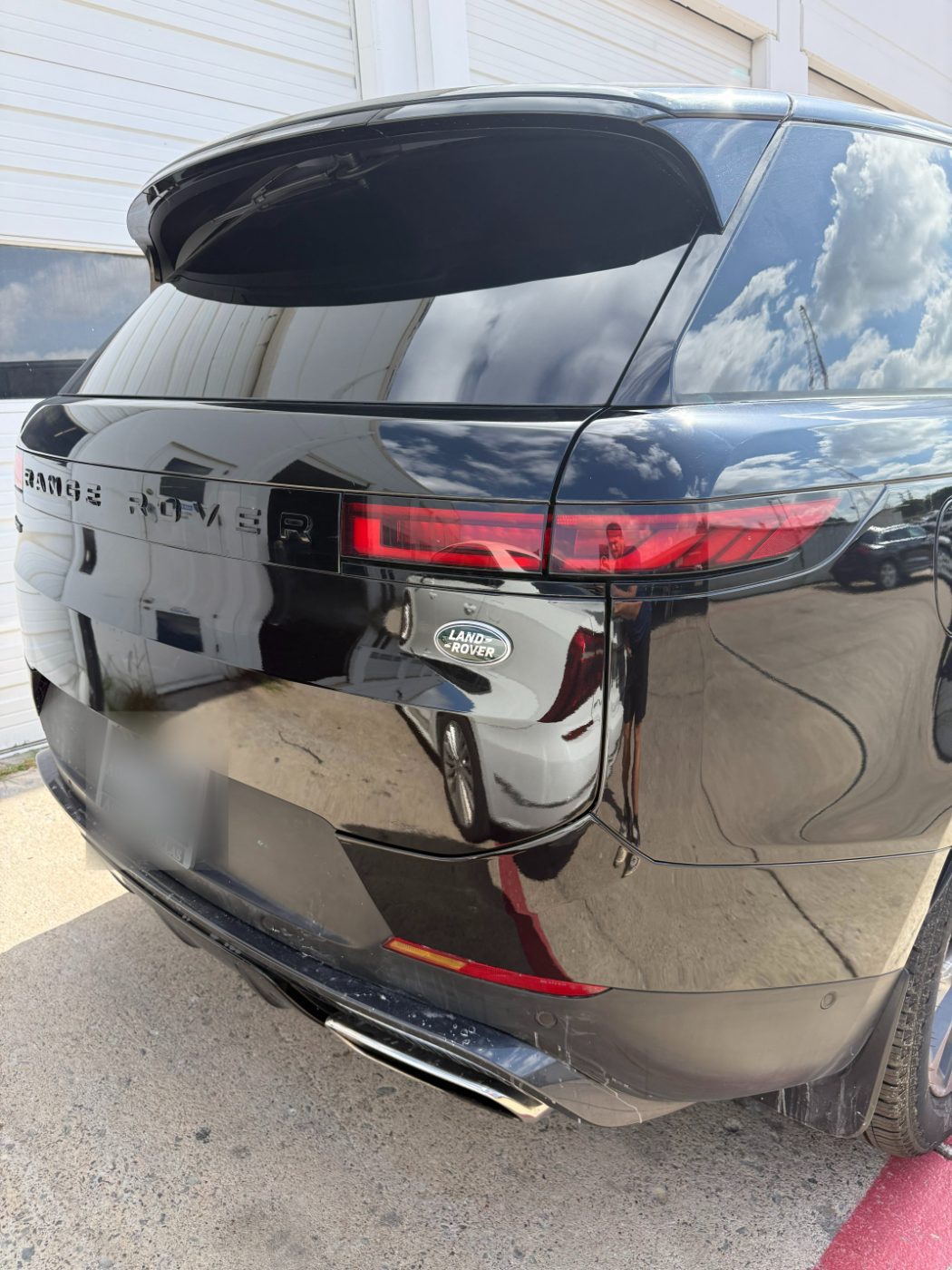
Range Rover rear quarter refinished in gloss black at the auto paint shop in Plano, TX Sprayed in-house

Your paint code is a starting point, not an answer.

Every vehicle carries a paint code, sometimes called a color code, and every auto paint shop can look it up. The problem is that the code describes the color your vehicle was on the day it was built, and it stopped being that color a while ago.

Three or four Plano summers in an open lot will move a red, flatten a black, and warm up a silver. Panels age at different rates depending on how much sun each one catches, so a roof and a lower door on the same vehicle can be measurably apart. Spray the factory code onto that vehicle, and you get a panel that is technically correct and visibly wrong.

There is a second problem the code does not tell you about. Manufacturers run variants. The same code can have half a dozen alternate formulas depending on which plant built the vehicle and which batch of paint was in the line that week. Picking the wrong variant produces a panel that is close enough to pass indoors and clearly off in daylight.

How we match a color.

Color matching at our Plano auto paint shop runs four steps, and the last one is the only one that counts.

01

Pull the code and the variant

The code narrows it to a family. The variant, read from the build data and the panels themselves, narrows it further.

02

Adjust for age

The formula gets tinted for how the finish has actually weathered, not how it left the factory.

03

Spray a test card

A spray-out card takes the mixed base coat, sprayed with the same flash time between coats and cleared the same way the panel will be, so what you are comparing is like-for-like rather than wet paint against cured paint.

04

Check it in daylight against your panel

Not under shop lighting. If the card is off, we adjust and spray another. Nothing goes into the booth until a card sits against the panel and disappears.

Plenty of shops advertise computerized color matching, and the camera is a useful tool. It still hands you a formula that has to be sprayed out and checked by eye, because a screen cannot tell you what a panel looks like at four in the afternoon on Preston Road.

Blending is what makes the repair vanish.

Even a perfect match will show if the new paint stops at a hard line. The eye is very good at finding an edge, and a panel sprayed corner to corner against an untouched neighbor reads as a repair in the right light no matter how close the color is.

Blending fades the new color out across the repaired panel and into the one beside it, so there is no boundary left to find, and clear coat then goes over the whole area as a single piece rather than stopping where the color did.

It uses more material and more spray booth time than stopping at the panel edge. It is also the difference between a repair that holds up in direct sun and one that only looks right under shop lighting. We treat blending as part of the job rather than an upgrade, which is worth knowing when you compare estimates. A quote that stops at the panel edge looks cheaper on paper and different on the vehicle.

Metallics, pearls and three-stage finishes.

Single-stage finishes and solid colors are the least demanding, and two-stage base and clear is the modern standard. Metallics contain aluminum flake, pearls contain mica, and both lie down differently depending on gun distance, air pressure, temperature, and how the panel is oriented. Two panels sprayed with identical material can still read differently if the technique changes between them.

Three-stage and tri-coat finishes are harder again, because the color is built in layers and the mid-coat has to go on at exactly the right film thickness. Too thin and it reads light, too heavy and it reads dark, and neither is correctable afterward without stripping back. These are the finishes where spray-out cards matter most, and where a shop that skips them gets found out.

Preparation is most of the job.

People judge a Plano auto paint shop, and its painters, on the spraying. What actually decides how long a finish lasts is what happened in the hours before it.

  • Old finish gets sanded back and feather-edged so the transition disappears under new material. Sanding grade matters as much as the sanding itself.
  • Bare metal gets etched and sealed, because paint over unprepared steel will lift.
  • Primer and sealer go on where filler or bare metal needs them, then get blocked flat, because blocking is what makes a panel straight before any color arrives.
  • Plastic gets an adhesion promoter and a flex additive, since a bumper cover that flexes will crack paint that does not.
  • Everything gets cleaned of wax, silicone, and road film, which is the usual cause of fisheyes. Gun setup and spray booth conditions handle the rest, because orange peel and runs are what a rushed paint job looks like a week later.
  • Masking takes as long as it takes, because overspray on a windshield seal is the detail that tells you what the rest of the work was like.

None of that shows in a photograph. All of it shows in two years.

What we refinish.

  • Single panel refinishing after a repair, a dent, or a scrape. The panel work itself is auto body repair and has its own page.
  • Storm damage across several panels, where the dents are handled as hail damage repair first, and only broken paint reaches the booth.
  • New panels painted to match before they go on the vehicle.
  • Bumper covers, which need a flex additive and different preparation than steel.
  • Aluminum panels, which need their own preparation and handling.
  • Panels from a collision repair are refinished once the metal work is done.
  • Clear coat failure, oxidation, and fading are common on Plano roofs and hoods after years of sun damage. A red gone chalky pink or a black gone grey is oxidation showing through a clear coat that has broken down. Once it has, the panel has to be stripped and refinished, because nothing polishes back a finish that is no longer there.
  • Full vehicle repaints and color changes are quoted individually.

What we paint.

People search by the panel or by the vehicle, so here is both, and all of it happens in the Plano booth.

  • Hood painting, roof painting, and tailgate painting. The horizontal panels take the sun and fail first.
  • Door painting, fender painting, rocker panels, and quarter panels, where most collision and parking damage lands.
  • Bumper painting, the most common job in the booth and the one that needs a flex additive.
  • Panel painting on truck bed sides and van panels, including fleet painting and commercial painting where a livery has to match across several vehicles.
  • Vehicle painting on cars, SUVs, trucks, and vans, domestic and import. Truck painting and SUV painting take more material than a sedan, which is reflected in the quote.
  • Trim painting and blackout work, including chrome delete on grilles and window surrounds. Two-tone and accent work, and gloss, satin, or matte finishes where the vehicle is the point rather than the repair.

We do not do vinyl wrap, decals, or graphics. Where a wrap is what you actually want, we will say so rather than quoting paint against it.

Touch-ups and spot repair.

Not every paint repair needs a panel in the Plano spray booth. Where the paint is unbroken and only the metal moved, paintless dent repair is the better answer, and we will say so.

Stone chips on a hood or a leading edge can be filled and levelled before they let moisture sit against bare metal and start corrosion. Left alone, they turn into rust spots, and a chip is a great deal cheaper to deal with than what it becomes.

Scuffs that have gone through the clear coat but not into the color can sometimes be wet sanded and buffed back rather than refinished, since there is enough clear coat left to cut and polish.

Spot repair, where a small damaged area is refinished and blended without taking the whole panel, is faster and cheaper where the damage sits away from a body line. Where it sits on an edge or in the middle of a large flat panel, spot repair shows, and full panel refinishing is the honest answer.

Why touch-up paint from a bottle never quite matches.

People try this before calling an auto paint shop, and it almost never works, so it is worth explaining why before you spend a Saturday on it.

A dealership touch-up pen or an aerosol from a parts store is mixed to the factory code. That is the same problem the whole page opens with, because your vehicle is no longer the color the code describes. The pen was accurate in the year the vehicle was built.

A rattle can also lays paint down differently than a gun does. The film goes on thicker and less evenly, metallic flake sits at the wrong angle, and there is no clear coat over the top blended into the surrounding finish. It sits proud, it reads darker, and it collects dirt at the edge.

Where DIY paint does make sense is a deep stone chip on a leading edge that you want sealed before it rusts, and where the spot is small enough that nobody will ever look at it directly. Anywhere someone can see, it costs less in the end to have it done once.

What auto paint costs.

No car paint shop in Plano publishes this, so here are the ranges we see at our own auto paint shop. They are ranges, not quotes, and the panel in front of us decides the number.

JobTypical range
Bumper cover$400 – $900
Single panel, such as a door$600 – $1,600
Multi-panel work with blending$1,500 – $4,000
Full repaintFrom $4,000

Ranges reviewed September 2026. Not a quote.

A cheap paint job advertised well below that last figure is a different service, sprayed over the existing finish without the preparation underneath.

Three things move a job to the top of its range. Color type, climbing from solid through metallic and pearl to three-stage. Condition underneath, because old filler, previous repairs, or lifting paint all add preparation time. And how far the blend has to travel, since one adjacent panel costs less than two.

Full repaints and color changes.

A full respray on a Plano daily driver is rarely worth what it costs. If the goal is curb appeal before you sell, refinishing the two or three panels that genuinely look bad does more for resale value than repainting the whole thing, at a small fraction of the money. The same is true before a trade-in or a lease return, where an appraiser is looking at exactly those panels. We will say so.

Where a full repaint does make sense is a vehicle with clear coat failure across most of its panels, or a project where the color is the point. A color change is a bigger job than it sounds, because door jambs, hood undersides, trunk channels, and the areas behind trim all have to be painted too, or the original color shows every time something opens.

Custom paint work, including color changes and accent work, is quoted individually. Bring the vehicle by for a free paint estimate, and we will talk it through. That paint consultation is free. We will pull color chips and color samples and spray a card so you are choosing against your own panel in daylight rather than trying to pick a color from a swatch under a showroom light.

Written to pre-loss condition.

Refinishing is where an estimate gets trimmed most often, because the operations that make a repair invisible are the easiest ones to leave off a line item. Blending into the adjacent panel. Clear coat over the blend. The extra material a three-stage finish takes.

We write paint work to pre-loss condition, meaning the finish comes back the way it was before the damage rather than close enough to pass at a glance.

We work for you, not your insurance company.

Extreme Hail & Collision is not a direct repair program member. A DRP shop is on an insurer's list because it agreed to that carrier's pricing and cycle times. We never signed one.

On refinishing, that matters more than most people realize, because blend time and clear coat over the blend are the first line items a tight estimate loses. Refinish hours get written short, paint labor gets capped, and the operations quietly disappear. When a carrier's estimate leaves them out, we write a paint supplement, document the difference, and go back to them rather than spraying to the number.

Curing takes the time it takes.

Turnaround on a single panel is usually two to four days from drop-off, and multi-panel work runs longer. Fresh paint then stays soft for a while after it leaves the Plano booth. It looks finished long before it is finished, and that gap is where most new paint gets damaged.

The clear coat is the part still hardening, so the care instructions we hand over are short. No automatic car washes and no waxing for the first thirty days. Wash by hand with plain water and a soft mitt if it needs it. Keep it out of standing sun for the first week where you reasonably can, and get bird droppings and tree sap off quickly, because fresh clear coat is more vulnerable to both than a cured finish.

How long a paint job lasts.

Auto paint work prepared properly on a modern two-stage system should outlast your ownership of the vehicle, and the factory finish beside it will usually fail first.

Paint durability comes down to what is underneath rather than what is on top. Paint sprayed over a sound, correctly prepared substrate stays put. Paint sprayed over old filler, lifting edges, or unsealed bare metal starts letting go within a couple of years, no matter how good the color looked on collection day.

Clear coat is what carries the UV load, and modern clear is far more fade-resistant than the single-stage finishes of thirty years ago. It is still the layer that eventually goes, which is why a garaged vehicle in Plano keeps its finish years longer than one that sits in an open lot.

Our paint warranty covers workmanship for as long as you own the vehicle. There is no warranty transfer at sale, so it protects you rather than the next owner.

What to check when you collect the vehicle.

Look at it properly before you drive away, because a paint problem is easiest to fix while the vehicle is still here.

  • Take it outside. Shop lighting hides everything a paint job can get wrong, and daylight shows all of it in ten seconds.
  • Stand at an angle rather than square on. A color that matches head-on can shift when you move, particularly on metallics and pearls, and the angle is where a bad variant shows up.
  • Look for the edge. Run your eye along where the new paint meets the old. A proper blend has no line to find. If you can see where one stops and the other starts, it was sprayed to the panel edge.
  • Check the texture. New paint should have the same orange peel as the panel next to it, no more and no less. Glass-smooth next to factory texture is as wrong as rough next to smooth.
  • Look at the edges and jambs. Door shuts, hood undersides, and the lip under a bumper are where a rushed job leaves overspray, tape lines, or unpainted areas.
  • Run a hand over it. Nibs, dust, and runs are things you feel before you see, and they are corrected by cutting and polishing rather than respraying.

If anything is off, say so before you leave. Extreme Hail & Collision would rather put a panel back in the booth than have you notice something in your driveway on Saturday.

Across North Texas.

Where your vehicle parks decides how the paint ages, and North Texas gives it a hard time either way.

A vehicle that lives in a garage holds its finish for years longer than one that sits out. That is why the same model, same color, same year can walk into an auto paint shop needing completely different work depending on which driveway it came from, and why we match against your panel rather than a chart.

McKinney and the northern edge of Collin County send us the sun-damaged work, the faded hoods and failing roofs off vehicles that have parked outside for a decade. Allen and Frisco lean the other way, newer vehicles in garages where the owner notices a single bumper scuff and wants it gone. Carrollton and Richardson are fifteen minutes down the George Bush and tend to arrive with one panel and a specific color problem. Plano covers all of it, because Plano has both the older streets east of 75 and the newer builds out past Legacy, and we see the full range from 75093 alone.

Further out, we take work from Dallas, Garland, Wylie, Prosper, Celina, and The Colony, though anything color-critical is worth the drive rather than the nearest option.

Our car paint shop is at 1101 Ohio Dr #111 in West Plano, 75093, just off the George Bush Turnpike and Preston Road, with parking at the door.

Free pickup and delivery cover the whole area, and we will help arrange a rental if the vehicle is with us for more than a day or two, though for auto painting most people want to stand next to the panel while we hold a card against it.
Extreme Hail & Collision has run its own auto paint shop in Plano, TX since 2022 and holds a 5.0 rating on Google. Family-owned, veteran-owned, Latino-owned, and not a direct repair partner for any insurance company. Read the reviews.

Auto paint questions.

Will a repainted panel match the rest of my car?

Yes, when it is matched and blended properly. Extreme Hail & Collision starts from your paint code, identifies the variant, adjusts for how the finish has aged in the sun, sprays a test card and checks it against the panel in daylight, then blends into the panels beside the repair. Matching to the code alone is why most repairs end up noticeable.

How do body shops match car paint?

Color matching starts with the paint code, which gives a family of formulas, and the variant narrows it further. That formula is then adjusted against the vehicle as it looks now, because sun and age shift color over time. A spray-out card is sprayed and checked against the panel in daylight before the job is mixed.

How much does a paint job cost in Plano?

At our Plano shop, a bumper cover is roughly $400 to $900, and a single panel such as a door runs roughly $600 to $1,600. Multi-panel work with blending runs $1,500 to $4,000, and a full repaint starts around $4,000. Color type and the condition underneath move a job within those ranges.

Can you paint just one panel?

Yes, and it is the most common job in the Plano booth. The panel is refinished, and the color is blended into the panels on either side, which is what stops the repair from showing at the edge. Painting a single panel corner to corner without blending is where most visible repairs come from.

How long will my vehicle be at the paint shop?

A single panel is usually two to four days from drop-off, which covers preparation, spraying, and enough cure time to handle the vehicle safely. Multi-panel work and full repaints run longer. We tell you the date when we write the estimate rather than letting it drift.

How long does automotive paint take to cure?

The vehicle is safe to drive within a day, but the finish stays soft for roughly thirty days. Avoid automatic car washes and waxing during that period and wash by hand if needed. Extreme Hail & Collision hands over the care instructions at collection.

How long will a paint job last?

Refinishing done properly by Extreme Hail & Collision on a modern two-stage system should outlast your ownership of the vehicle. Paint durability depends on the substrate underneath rather than the color on top, and clear coat carries the UV load, so a garaged vehicle keeps its finish years longer than one parked in the open.

Can I just use touch-up paint from the dealership?

For a deep stone chip you want sealed before it rusts, yes. For anywhere visible, no, and we will tell you which one you have. A touch-up pen or aerosol is mixed to the factory code, which stopped describing your vehicle years ago, and a rattle can lays the film on thicker with no clear coat blended over it.

What does the paint warranty cover?

The Extreme Hail & Collision warranty covers our workmanship for as long as you own the vehicle. That covers paint lifting, peeling, or a blend that fails. It does not cover stone chips, new damage, or the manufacturer's own paint defects on panels we did not spray. The warranty stays with you as the owner and does not transfer at sale.

Does a repainted panel show on a vehicle history report?

It can, particularly when the work went through an insurance claim. That is one reason we recommend paintless dent repair over refinishing whenever the paint is unbroken, since it leaves nothing on the record and keeps the factory finish on the vehicle.

Do you do custom paint work?

Yes. Alongside collision and storm refinishing, and alongside paint and body work on the same vehicle, Extreme Hail & Collision takes on custom paint work including color changes and accent work. Those are quoted individually, so bring the vehicle by, and we will talk it through.

Can a scratch be buffed out instead of repainted?

Sometimes. If it has gone through the clear coat but not into the color, it can often be wet sanded and buffed back rather than refinished, because there is enough clear coat left to cut and polish. Deeper than that, the panel needs refinishing. We tell you which one you have before quoting either.

Do you paint trucks and fleet vehicles?

Yes. Truck painting, SUV painting, and van panels are all standard work at the Plano shop, and we take fleet painting and commercial painting where a livery has to match across several vehicles. Larger vehicles take more material, which is reflected in the quote.

Which areas do you serve for auto paint?

The Extreme Hail & Collision auto paint shop is in Plano first, then Frisco, Allen, Richardson, Carrollton, and McKinney, with the rest of Collin County and the wider metroplex reaching us too. Free pickup and delivery is available across the area.

Where to next.

Stop by the shop

Pull in. We'll take it from here.

Bring the vehicle into the Plano shop, and we will match it in daylight. Paint estimates are free. Walk in Monday to Friday, 9 to 6, or Saturday 10 to 1. We are at 1101 Ohio Dr #111 in West Plano, 75093, just off the George Bush Turnpike and Preston Road.

Call
(469) 777-6701
contact@extremehailcollision.com
Visit
1101 Ohio Dr #111
Plano, TX 75093
Just off the George Bush Turnpike & Preston Road
Hours
Monday to Friday9a to 6pSaturday10a to 1pSundayClosed
Get a Free Estimate Call (469) 777-6701