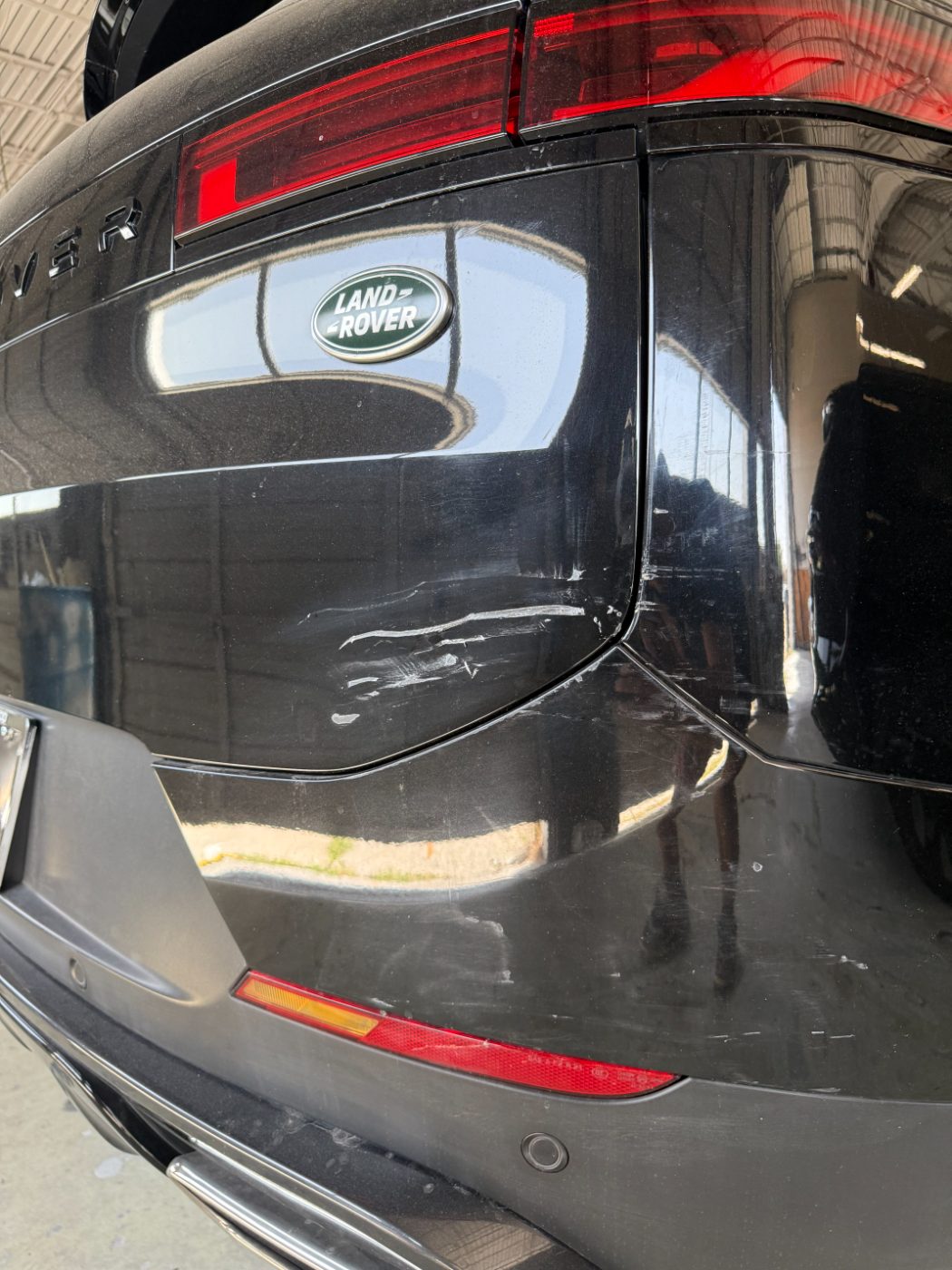
Why they are hard to get right.
All-aluminum body. Range Rover moved to aluminum-intensive construction well before most of the market, and aluminum has to be worked differently than steel — smaller moves, careful heat, no expectation that the panel will help you by springing back. There is very little margin for a push that goes too far.
Broad, flat surfaces. The hood and roof are close to planar across a large area. Flat panels telegraph every imperfection: a dent reads as a dark spot from thirty feet, and so does an over-corrected repair. These panels have to be finished to the reflection, sighted along their full length, not judged by touch.
Adhesive-bonded and riveted joints. Aluminum structures are bonded and riveted rather than spot-welded throughout. Bonded seams mean there are places a tool simply cannot get behind, so more of the work shifts to glue pulling from the outside — slower, and it requires knowing which pull tabs and adhesives are safe on the factory finish.
Panel replacement is a serious job. On a bonded aluminum body, replacing a panel is not the routine operation it is on a steel car. That raises the value of repairing what is there.
 Free Evaluation