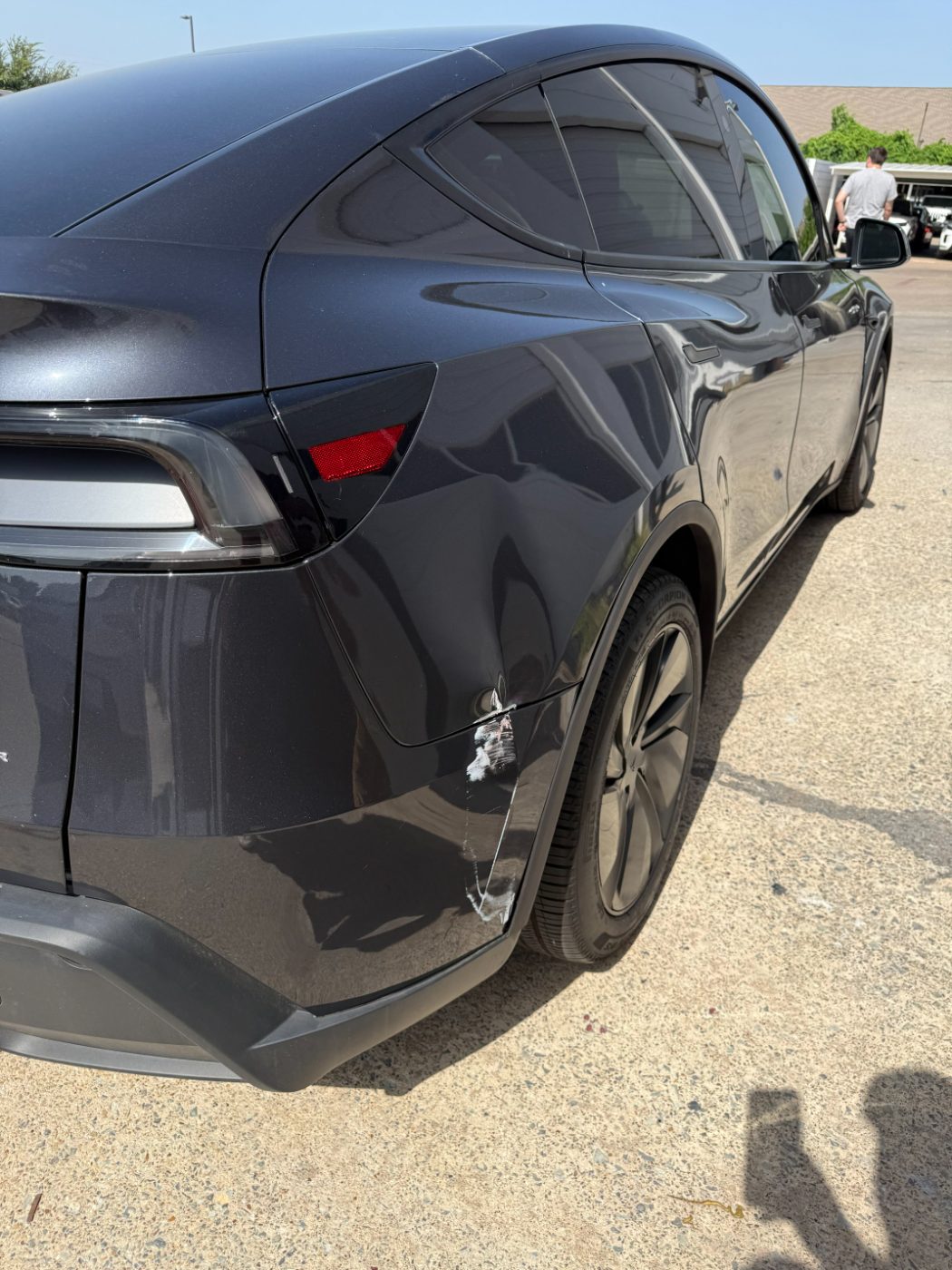
What makes a Tesla its own problem.
Big, flat, single-piece panels. A Model 3 or Model Y roof and hood are large uninterrupted surfaces with very little crowning. Flat panels are less forgiving than curved ones: there is no natural tension helping the metal hold its shape, so every correction has to be precise and the whole surface has to be read as one piece rather than dent by dent.
Aluminum in much of the body. Like a BMW, the aluminum has minimal memory and has to be walked back into shape deliberately. On the larger Tesla panels that means a lot of small, controlled moves rather than a few big ones.
The glass roof. On most Model 3 and Model Y cars the roof is glass, not metal — which means it cannot be dent-repaired at all. Hail either broke it or it did not. That materially changes how a claim gets scoped, and it is the single most common thing insurers get wrong on a Tesla hail estimate.
Softer factory paint. Tesla finish is widely regarded as thinner and softer than most German marques. That argues even harder against refinishing — a repaint is hard to match to a panel that is already weathered, and it is another reason to keep the original paint on the car if the metal can be saved.
 Free Evaluation